Why Market Headlines Should Not Run Your Financial Plan
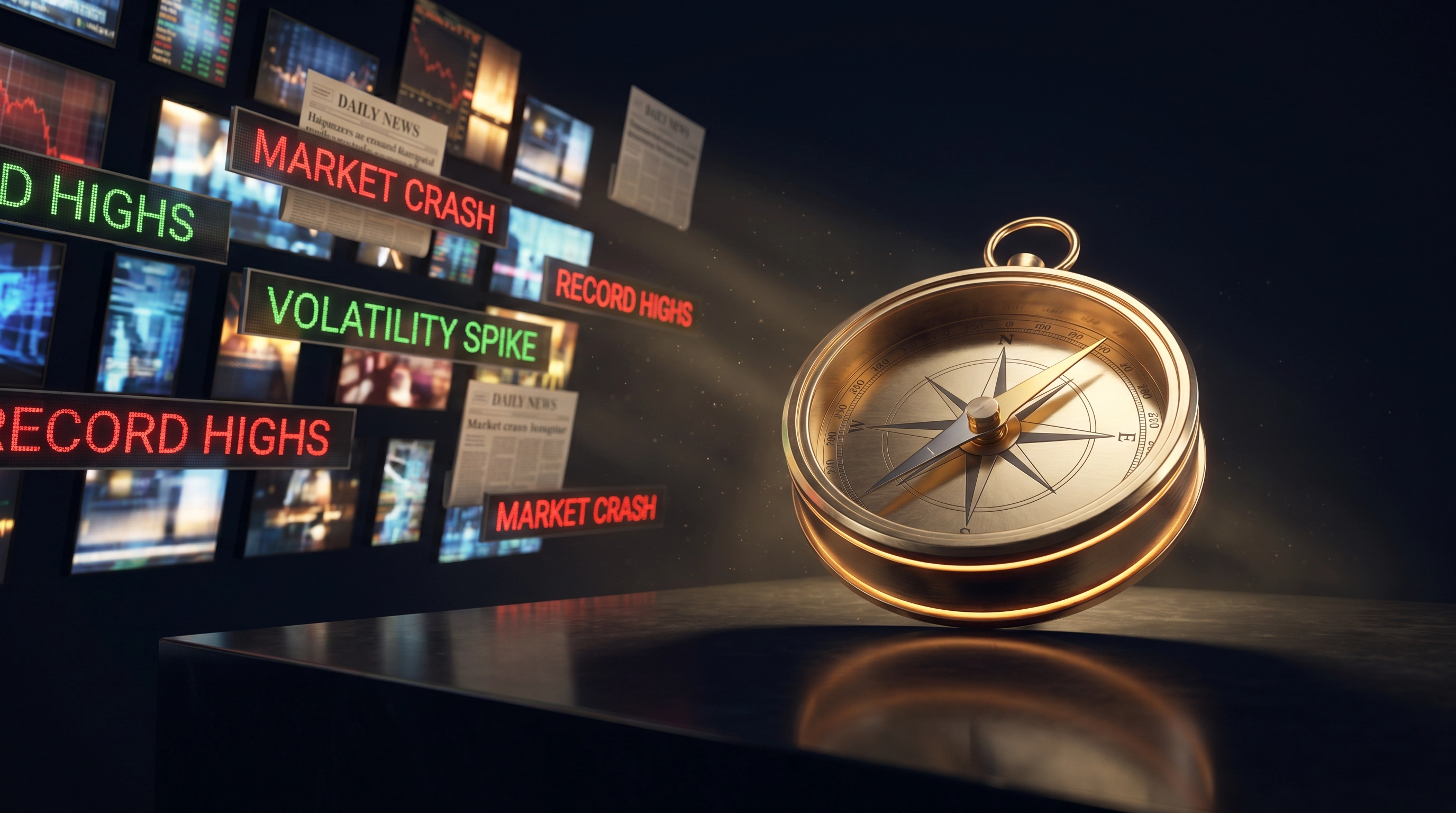
Turn on the news right now and you will find something designed to make you feel like you should react. Geopolitical tensions are rising. Trade policy is shifting. Supply chains are being reconsidered. Markets are moving. Analysts are predicting. Headlines are competing for your attention.
Some of it matters. Some of it is noise. The problem is that in the moment, it is difficult to tell which is which. The people writing the headlines are not necessarily motivated to help you make calm, personal, long-term financial decisions. Anxiety sells. Excitement sells. Certainty sells. A reasonable assessment of what this means for your actual financial life does not get as many clicks.
I grew up in Calgary. I was here in 2008 when the financial crisis hit and many equity-heavy portfolios fell sharply. I was here in 2015 when the oil price collapsed and put real pressure on Alberta families, businesses, and careers. I watched neighbours, family friends, and people in my community go from feeling financially secure to genuinely frightened, sometimes very quickly. Then COVID arrived and created another version of the same problem.
What I noticed across those moments was not simply that bad things happened. Bad things happen. What stood out was how many people had no plan for when they did. They had money moving around but no real strategy behind it. They had investments but no clear understanding of what role those investments were supposed to play. They had income but no structure that meant anything when that income was disrupted. When everything got loud and scary, decisions were often made based on fear and headlines rather than anything resembling a process.
That is part of what pushed me into this industry. Not because I had all the answers, but because I saw too many good, hardworking people receive product-first conversations when they needed plan-first advice. They did not need someone to hand them another product and call it planning. They needed someone to sit across from them, ask what they actually wanted their life to look like, and help them build something durable enough to withstand the next inevitable period of uncertainty.
That is what a financial strategy is supposed to provide. Not a prediction. Not a guarantee. Direction.
Which brings me to the other day. I sat in a room with a portfolio manager who runs a significant amount of money for a living. I went in expecting confident market calls about oil, interest rates, and geopolitics. What I heard instead was something more useful: a clear picture of how a disciplined professional thinks when the world is loud.
The most memorable thing he said was almost throwaway in tone. He mentioned that if he is right about 65 percent of the time, that would be an excellent outcome. If he were right 75 percent of the time, people might write books about him. He said it with a straight face, and it landed because that kind of humility is the opposite of what you often hear in financial commentary. Most of the time, someone is telling you they have figured something out. They know where rates are going. They know what a political decision will mean for markets. They know how a geopolitical event will affect energy prices six months from now.
This portfolio manager was making a more honest point. Nobody knows with certainty. The real work is building a process disciplined enough to hold up even when you are wrong. That is not comforting in the way a bold prediction can be comforting, but it is more useful when real money is involved.
He described the investments he looks for as sitting at the intersection of three things: a strong business, a long-term tailwind behind it, and a price that still makes sense. Remove any one of those three and the picture gets complicated. A great company at an unreasonable price is still a risk. A cheap company facing the wrong structural trend can become what he called a value trap.
He used a pointed analogy for it. Imagine the best buggy whip manufacturer in the world, right around the time automobiles started replacing horses. Technically excellent. Competitively dominant. Still facing a serious problem. A low price does not fix a broken thesis, and a compelling headline does not turn a reaction into a strategy.
He also talked about how his team operates, and this part is easy to underestimate. His culture expects people to challenge each other directly, including junior analysts pushing back on senior portfolio managers. He called it disagreeing without being disagreeable. That is not a soft management principle. If everyone around a decision-making table is rewarded for agreement, weak ideas survive longer than they should. Thoughtful challenge is what catches the problem before it costs you.
The same thing is true in any serious financial conversation. A review meeting that simply confirms what you already believe is not doing its job. The useful questions are often the uncomfortable ones. Is your retirement income projection realistic, or is it what you need to believe to feel okay? Is your insurance coverage actually matched to what your family needs right now, or is it what you set up years ago and never revisited? Are your investment expectations based on evidence, or are they based on how markets felt during the good years?
The last idea from the training day that stayed with me was the distinction between core holdings and what he called the "spice." He compared it to a plate of eggs with Tabasco on the side. The eggs are the meal. The Tabasco adds flavour. You would not pour a bottle of hot sauce into a bowl and call it breakfast.
In a portfolio, some investments are there to do the heavy lifting over time. Others may play a specific supporting role and belong in a proportionally smaller position. Not every holding should have the same job. Confusing those roles is a surprisingly common mistake.
Whether the next concern is trade policy, interest rates, energy prices, global conflict, or another Alberta downturn that few people see coming, there will always be a reason to feel like you should do something. The news cycle is built around that feeling. It is not built around helping you think clearly.
A good financial strategy is different. It is not about predicting what happens next. It is about building something strong enough that what happens next does not derail everything you have been working toward.
At Five Ridge Financial, we want to help people finance their future, not just their next purchase. The difference is not income alone. It is whether that income is being directed by a plan.
This article is for general educational purposes only and is not a recommendation to buy, sell, or hold any specific investment. Every financial situation is different, and no strategy is suitable for everyone. Decisions should reflect your personal goals, risk tolerance, time horizon, tax situation, insurance needs, and overall financial strategy.
Get notified of new articles
Subscribe to receive an email when we publish new blog posts. No spam, unsubscribe anytime.
Comments
No comments yet. Be the first to share your thoughts.
Want to Know Where You Stand?
Our Financial Snapshot gives you a clear picture of your current position and helps identify what to focus on next.