
Audio version coming soon.
US vs. Canadian Life Insurance: What the Private Credit Headlines Actually Mean for Your Coverage
If you have been following financial news lately, you have probably seen the Wall Street Journal investigation about US life insurers sitting on over $1 trillion in private credit. The headlines are alarming. Words like "opacity," "shadow ratings," and "regulators in the dust" tend to get people's attention.
So if you hold life insurance, segregated funds, or an annuity in Canada, the obvious question is: should you be worried?
The short answer is no, but the longer answer is worth understanding. Because the US concerns are legitimate, and the reasons they do not directly apply to your coverage in Canada come down to how the two countries regulate their insurance industries. Those differences are not minor.
What Is Actually Happening in the US
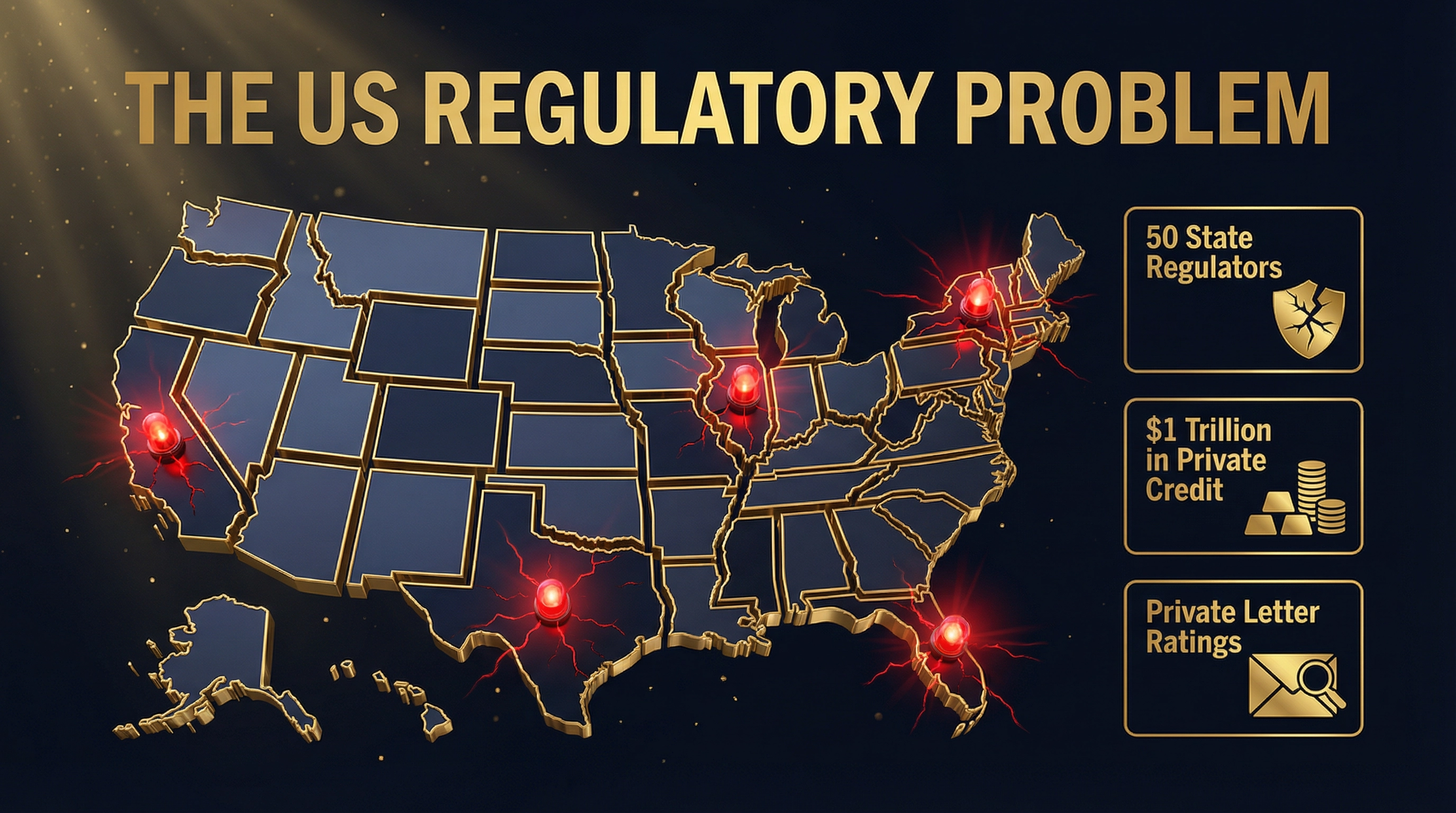
The US life insurance market is regulated state by state. There is no single federal regulator watching the whole picture. Capital requirements are set by Risk-Based Capital formulas that have historically been generous toward private credit, especially when carriers use "private letter ratings" instead of public credit ratings from agencies like Moody's or S&P [1].
This matters because private equity firms have been buying up US insurance companies and using policyholder reserves to invest aggressively in private credit. The returns look good on paper, but the assets are hard to value, hard to sell in a hurry, and hard for regulators to assess. The NAIC (the body that coordinates US state regulators) is working on reforms, but they are playing catch-up on a problem that has already grown very large.
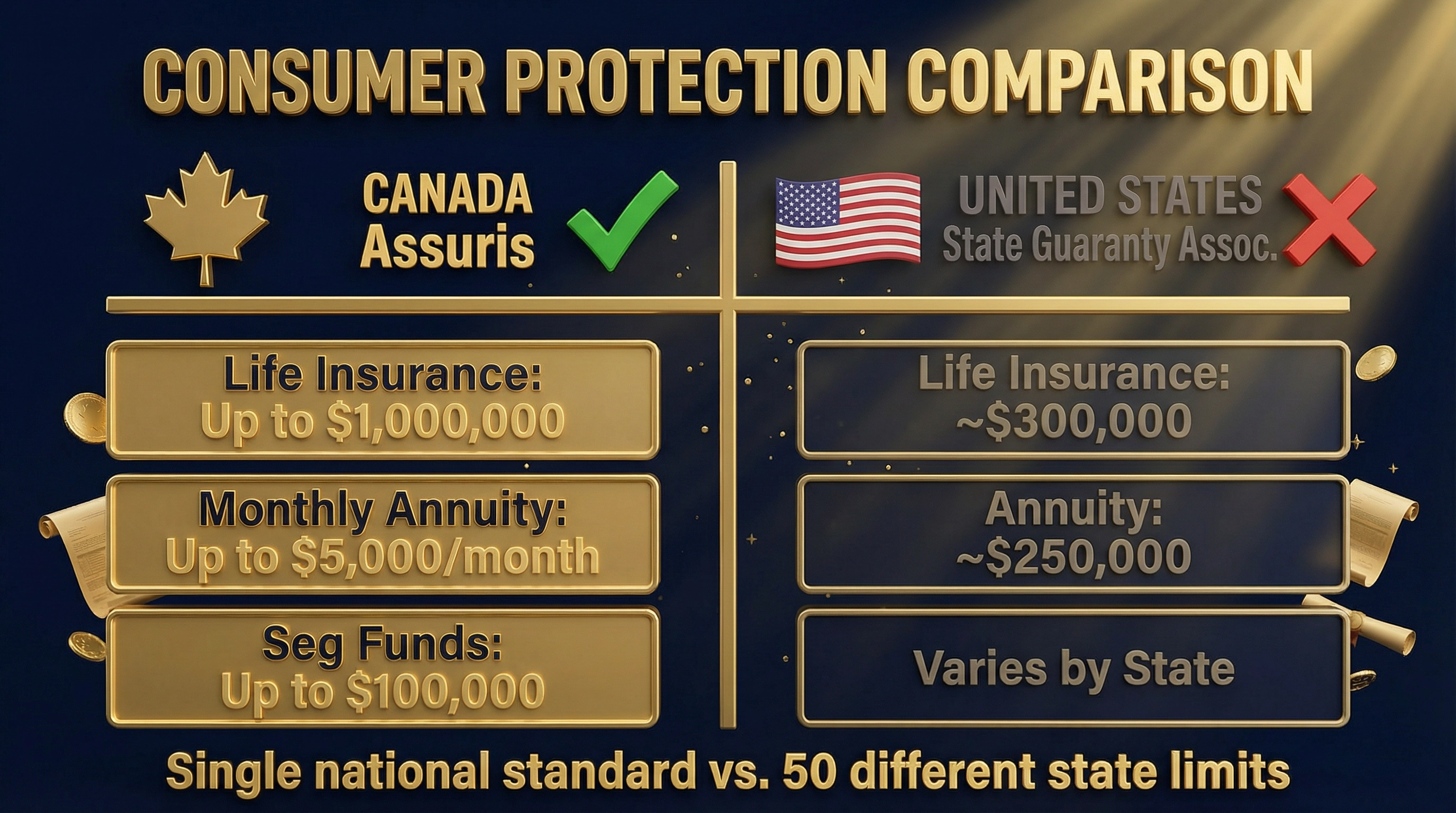
On the consumer protection side, US state guaranty associations typically cover $300,000 for life insurance death benefits and $250,000 for annuity values, though limits vary by state [4]. If a carrier fails, that is your backstop.
How Canada Is Different
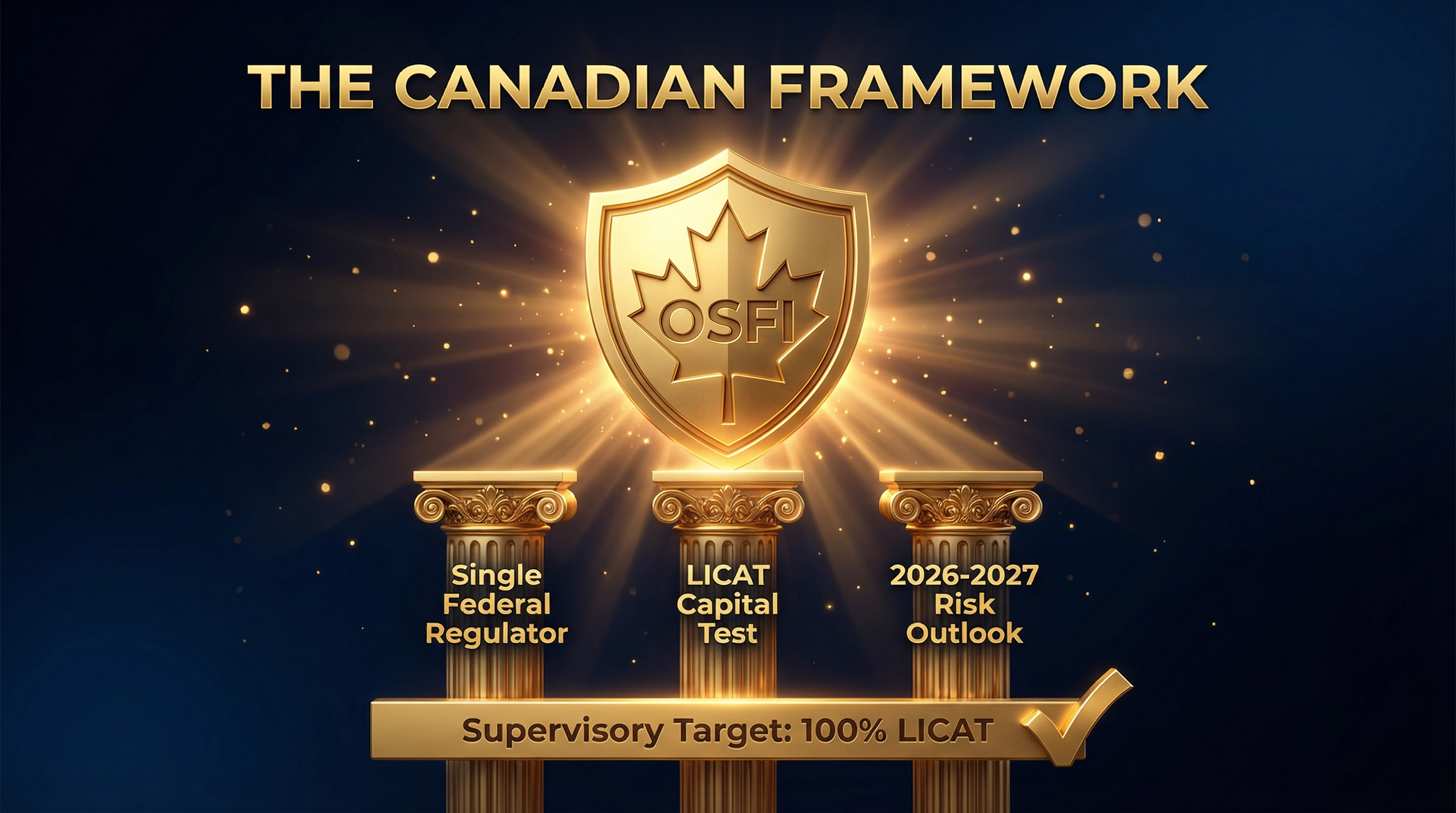
Canada has one federal regulator for life insurance: the Office of the Superintendent of Financial Institutions (OSFI). OSFI is globally recognized for being conservative and proactive. Canadian life insurers operate under the Life Insurance Capital Adequacy Test (LICAT), which imposes strict capital requirements across all risk categories [2].
Here is the critical distinction. OSFI's Annual Risk Outlook for 2026-2027, released today (April 14, 2026), explicitly identifies private credit as a top priority. OSFI noted that "private market assets are playing a greater role in insurers' investment portfolios, introducing increased opacity, complexity, and potential illiquidity constraints" [3].
That sounds similar to the US problem, and in some ways it is. The difference is timing and posture. US regulators are reacting to a problem that has already ballooned. OSFI is proactively conducting targeted reviews of carrier investment risks before a crisis materializes. That is a fundamentally different regulatory posture, and it is the reason Canadian carriers operate with more discipline around these assets.
On the consumer protection side, Assuris provides a single national safety net. For life insurance, the guarantee is up to $1,000,000 or 90% of the death benefit, whichever is higher. For annuities providing monthly income, the guarantee is up to $5,000 per month or 90% of the payment. For segregated funds and accumulation annuities, the limit is $100,000 or 90% of the accumulated value [5]. Those numbers are meaningfully stronger than what most US states provide.
What the Carrier Numbers Actually Show
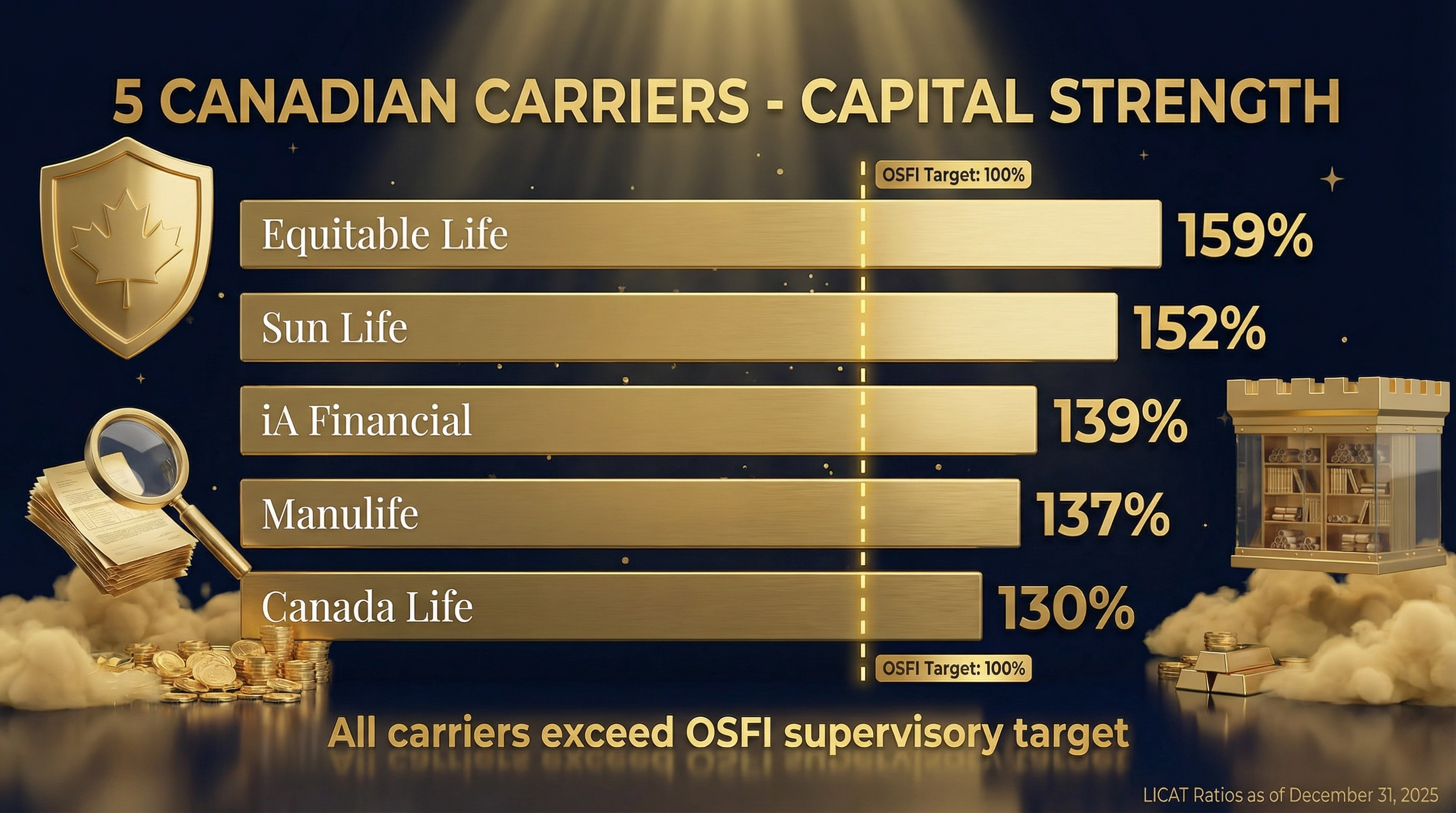
Headlines are one thing. Balance sheets are another. Here is what the year-end 2025 financials look like for five major Canadian carriers.
Equitable Life of Canada
Equitable is a mutual company, meaning it is owned by its participating policyholders rather than public shareholders. That structure matters because it removes the pressure to chase short-term yield to satisfy Wall Street analysts or private equity sponsors.
At year-end 2025, Equitable reported a LICAT ratio of 159%, well above OSFI's supervisory target of 100% [6]. Total assets reached $12.7 billion with net income of $180 million and an 11% return on policyholders' equity. Morningstar DBRS confirmed its Financial Strength Rating at A (high) with Stable Trends [7].
Within Equitable's participating account portfolio ($3.15 billion), fixed income makes up 50% of the allocation. Private placements account for 12% of that fixed income allocation, up from 10% in 2024 [8]. That increase is worth monitoring, and it aligns with OSFI's broader industry observations. But 12% of 50% of one portfolio is a measured exposure, not a concentrated bet. The vast majority of those private placements are investment-grade, and the overall portfolio remains diversified across government bonds, corporate bonds, and commercial mortgages.
iA Financial Group
iA Financial Group (TSX: IAG) is one of the largest insurance and wealth management groups in Canada, with $341.1 billion in assets under management and administration [9].
At year-end 2025, iA reported a solvency ratio of 133% (137% pro forma under the revised CARLI guideline effective January 1, 2026). Core return on equity for the trailing twelve months was 17.1%. The company holds ratings of AA- from S&P, AA (low) from DBRS, and A+ (Superior) from AM Best [10].
The investment portfolio tells a clear story about risk appetite. Bonds represent 67.6% of total invested assets. Within that bond portfolio, bonds rated BB and lower (sub-investment grade) make up only 0.60% [9]. That is a negligible exposure to the kind of high-yield, leveraged credit that is driving concern in the US market.
Sun Life Financial
Sun Life Financial (TSX: SLF) is one of the largest financial services companies in the world, with $1.60 trillion in total assets under management as of December 31, 2025 [11].
At year-end 2025, Sun Life Financial Inc. reported a LICAT ratio of 157%, up from 154% the prior year. Sun Life Assurance (the operating insurance subsidiary) reported a LICAT ratio of 140%, comfortably above OSFI's supervisory target [11]. The company holds financial strength ratings of AA from both DBRS and Fitch, and A+ (Superior) from AM Best [12].
Sun Life's capital position is one of the strongest in the Canadian market. The holding company's 157% LICAT ratio provides a substantial buffer, and the company has consistently maintained ratios well above regulatory minimums. Their financial leverage ratio of 23.5% remains well within their medium-term target of 25% [11].
Manulife Financial
Manulife Financial (TSX: MFC) is Canada's largest insurance company by assets, with $1.7 trillion in assets under management and administration as of December 31, 2025, serving over 37 million customers globally [13].
At year-end 2025, Manulife reported a LICAT ratio of 137% and a financial leverage ratio of 23.9%, both well within target ranges. The company delivered record core earnings in 2025, with remittances from operating units totaling $6.4 billion [14]. Manulife holds financial strength ratings of A+ (Superior) from AM Best (affirmed December 2025), and a Stable outlook from Fitch [15].
Manulife's scale and diversification across Canada, the US, and Asia provide meaningful risk distribution. The company's capital generation has been consistently strong, and its LICAT ratio has remained above 130% through multiple economic cycles.
Canada Life (Great-West Lifeco)
The Canada Life Assurance Company is the principal operating subsidiary of Great-West Lifeco (TSX: GWO), one of the largest insurance and wealth management organizations in Canada with approximately $2.9 trillion in total assets under administration [16].
At mid-2025, Canada Life reported a consolidated LICAT ratio of 130%, above OSFI's supervisory target [17]. The company holds some of the strongest credit ratings in the Canadian insurance industry: AA (Very Strong) from S&P, Aa3 (High Quality) from Moody's, A+ (Superior) from AM Best, AA (Very High Quality) from Fitch, and AA (Excellent) from DBRS [16]. That breadth and consistency of ratings across all five major agencies is notable.
Canada Life's position within the Great-West Lifeco group provides additional stability. The parent company's diversified operations across Canada, the US, and Europe create a broad base of earnings and capital generation that supports the Canadian insurance operations.
What This Means for Your Coverage
If you hold a life insurance policy, a segregated fund, or an annuity with a Canadian carrier, the US headlines do not change the fundamentals of your coverage. Here is why:
Your regulator is ahead of the curve, not behind it. OSFI has identified private credit as a priority and is actively reviewing carrier exposures. This is the opposite of the US situation, where regulators are playing catch-up after the fact.
Your carriers are well capitalized. All five carriers analyzed here maintain LICAT ratios well above regulatory minimums, ranging from 130% (Canada Life) to 159% (Equitable). Sun Life sits at 157%, iA at 133%, and Manulife at 137%. These are not institutions operating on thin margins. They hold substantial capital buffers backed by investment-grade portfolios and consistent earnings generation.
Your safety net is stronger. Assuris provides meaningfully better coverage than the US state guaranty system. A $1,000,000 life insurance guarantee and $5,000 per month annuity guarantee provide a level of backstop that most US states cannot match.
None of this means Canadian carriers are immune to investment risk. The gradual increase in private market allocations is worth watching, particularly for how it might affect future dividend scales and product pricing over time. But the risk of a sudden, systemic collapse among major domestic carriers is extremely low given the current regulatory environment and carrier financials.
What You Should Actually Do
The worst response to these headlines is to make a reactive decision about your coverage based on a problem that exists in a different country under a different regulatory framework.
The better response is to make sure your overall plan accounts for the full picture. Your insurance coverage, your investment allocation, your tax strategy, and your estate plan all interact with each other. If one piece is out of alignment, that is where the real risk lives, and it has nothing to do with private credit headlines.
If you are not sure where you stand, reach out to us and we will take a look at the full picture together.
This article is for general educational purposes only and does not constitute personalized financial, investment, or tax advice. The analysis reflects publicly available data as of Q4 2025 and Q1 2026. Consult a licensed financial professional before making insurance or investment decisions.
Sources:
[1] Wall Street Journal, "Insurers' $1 Trillion Buildup in Private Credit Is Leaving Regulators in the Dust," March 2026.
[2] Office of the Superintendent of Financial Institutions (OSFI), "Life Insurance Capital Adequacy Test - Guideline," 2025.
[3] OSFI, "Annual Risk Outlook - Fiscal Year 2026-2027," April 14, 2026.
[4] National Organization of Life and Health Insurance Guaranty Associations (NOLHGA) State Limits Data.
[5] Assuris, "How Am I Protected? - Coverage Limits," 2026.
[6] Equitable Life of Canada, "2025 Financial Highlights," February 2026.
[7] Morningstar DBRS, "Rating Report: The Equitable Life Insurance Company of Canada," August 2025.
[8] Equitable Life of Canada, "Participating account asset mix quarterly update," December 2025.
[9] iA Financial Group, "Fact Sheet - Fourth Quarter 2025," February 17, 2026.
[10] AM Best, "Credit Ratings of Industrial Alliance Insurance and Financial Services Inc.," September 2025.
[11] Sun Life Financial, "Fourth Quarter and Full Year 2025 Results," February 11, 2026.
[12] Morningstar DBRS, "Sun Life Financial Inc. Rating Report," 2025; AM Best, "Credit Ratings of Sun Life Assurance Company of Canada."
[13] Manulife Financial, "Q4 2025 Company Fact Sheet," February 2026.
[14] Manulife Financial, "Full Year and Fourth Quarter 2025 Results," February 11, 2026.
[15] AM Best, "Credit Ratings of Manulife Financial Corporation," December 12, 2025; Fitch Ratings, "Manulife Ratings Affirmed, Outlook Stable," July 24, 2025.
[16] Great-West Lifeco, "Credit Ratings" and "2025 Annual Report," March 2026; AM Best, "Credit Ratings of Great-West Lifeco Inc.," March 27, 2026.
[17] Canada Life, "Management's Discussion and Analysis, Q1 2025," May 7, 2025.
Get notified of new articles
Subscribe to receive an email when we publish new blog posts. No spam, unsubscribe anytime.
Comments
No comments yet. Be the first to share your thoughts.
Want to Know Where You Stand?
Our Financial Snapshot gives you a clear picture of your current position and helps identify what to focus on next.