
Audio version coming soon.
The $660,000 Tax Bill: Why We Need to Talk About Estate Taxes Without the Fear Tactics
If you follow Canadian financial news, you probably saw the story. An Ontario family. Two parents in their early 60s. Eleven months apart. And a tax bill their kids are still dealing with.
Jackie and Michael did everything right. They worked hard, saved diligently in their RRSPs, and owned a family cottage that had been in the family for decades. When Jackie passed away, her RRSP rolled over to Michael tax-free. That is exactly how the system is designed to work. But when Michael passed away unexpectedly later that same year, there was no surviving spouse left to receive the rollover. The entire combined RRSP balance of $715,000 was treated as income on his final tax return. Add the capital gains on the cottage, and their children were left with a $660,000 tax liability that nearly erased everything their parents had spent a lifetime building.
Visualizing the "Tax Gap"
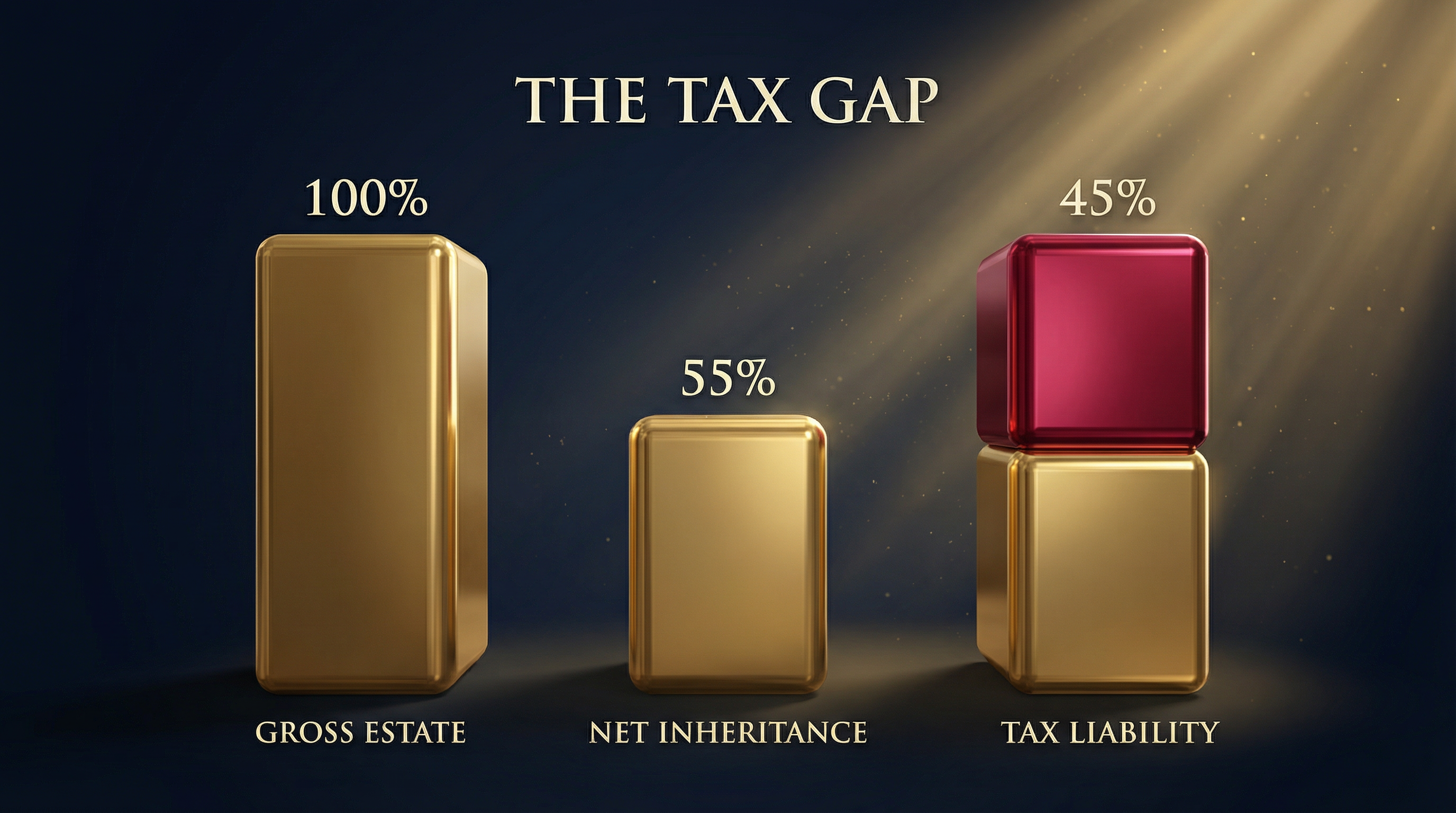
Take a moment with that. These were not careless people. They were not wealthy in the way that word usually gets thrown around. They were a middle-class Canadian family who did the work, paid their bills, and trusted that what they built would go to their kids. And it almost did not.
I want to tell you something my industry does not say enough. The CRA was not wrong here. There was no audit, no penalty, no bureaucratic overreach. This was the completely predictable mathematical result of how Canadian tax law works. Every single dollar that goes into an RRSP gets a tax deduction on the way in and grows sheltered inside the account. But that tax does not disappear. It waits. And it collects interest in the form of account growth until you either withdraw the money or you pass away.
The Part Most Advisors Skip Over
Canada does not have an estate tax the way the United States does. What we have is something called deemed disposition. When you die, the CRA treats every asset you own as if you sold it at fair market value on that date. For a primary residence, the principal residence exemption protects you. For everything else, the tax bill gets calculated and added to your final return.
For RRSPs and RRIFs, the full balance gets added to your income in that final year. At $715,000, a large portion of that balance gets taxed at the highest marginal rate, which in Ontario sits around 53 cents on the dollar. Not 30 percent. Not 40 percent. Over half.
Managing the "Tax Spike"
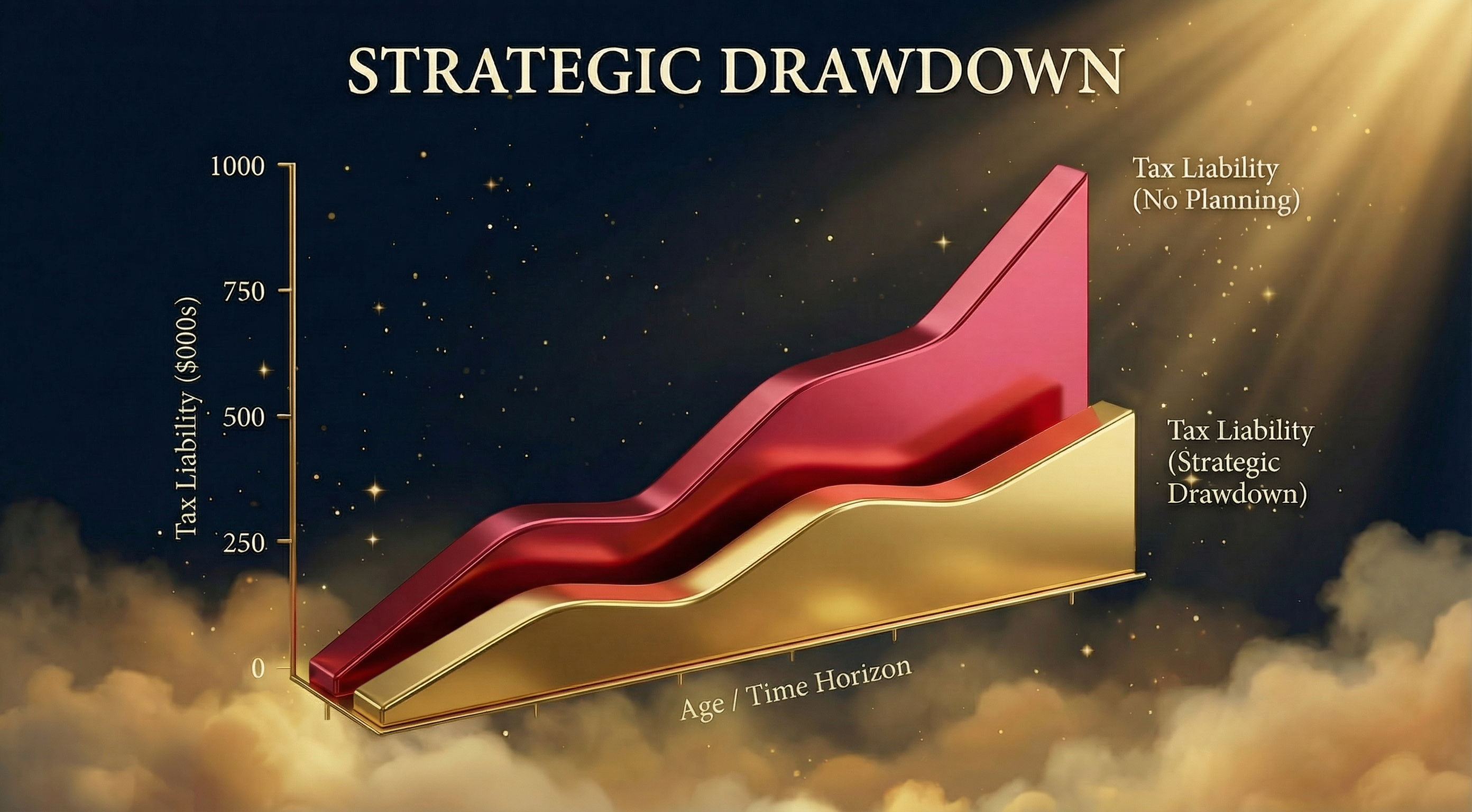
If this outcome is predictable, it can be planned for. Strategic RRSP drawdown is often the most overlooked tool. If you are in your 60s with a healthy registered account, it may make sense to start drawing it down before you are forced to, even if you do not need the income right now. Smaller withdrawals over time means you pay tax at your current marginal rate rather than cramming the full balance into a single final return taxed at the top.
What You Can Actually Do About It
Life insurance, at the estate planning stage, is not about income replacement. It is about liquidity. If you can look at your financial picture today and estimate that your estate will owe $400,000 or $600,000 or more in tax, a permanent policy can be structured to deliver exactly that amount tax-free to your beneficiaries at the moment they need it most.
Preserving Your Legacy

Your children keep the cottage. They keep the investments. They keep what you built. And the CRA gets paid without your family having to liquidate anything under pressure.
At Five Ridge Financial, we work with Canadian families and incorporated professionals to identify exactly these kinds of blind spots before they become a crisis. Protection, growth, tax efficiency, and legacy do not live in separate buckets. They interact with each other constantly, and a plan that ignores one will eventually fail at another.
This article is for general information purposes only and should not be relied upon for tax, legal, or investment decisions. Every situation is unique. Five Ridge Financial Ltd. is an Alberta-based insurance and segregated funds advisory firm.
Get notified of new articles
Subscribe to receive an email when we publish new blog posts. No spam, unsubscribe anytime.
Comments
No comments yet. Be the first to share your thoughts.
Want to Know Where You Stand?
Our Financial Snapshot gives you a clear picture of your current position and helps identify what to focus on next.